


Working principle of centrifugal spray dryer
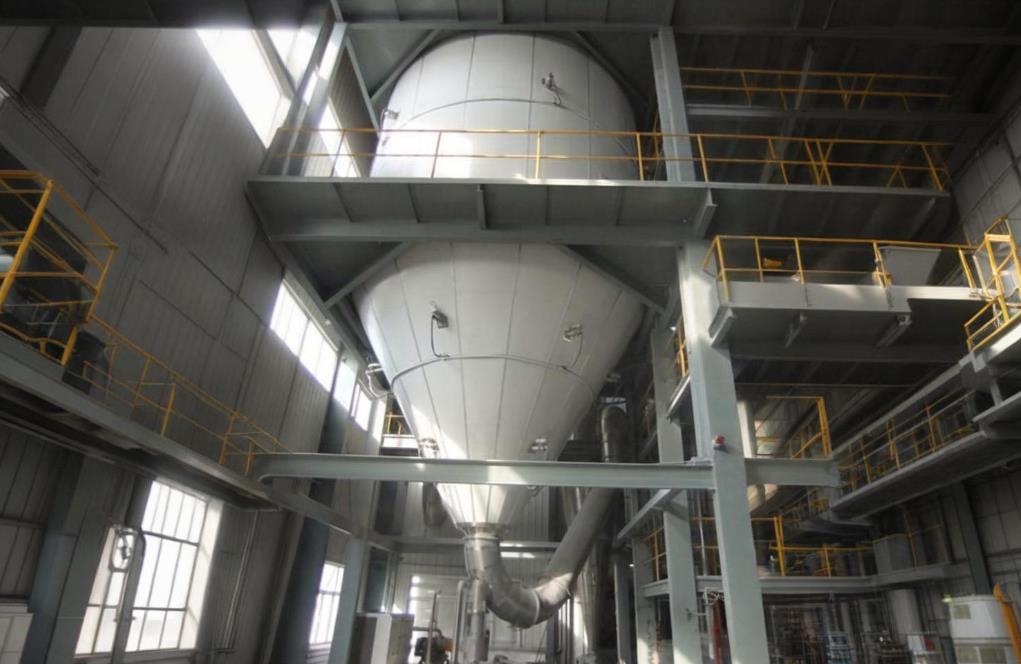
The centrifugal spray dryer utilizes a high-speed rotating atomization disc to generate centrifugal force, atomizing the feed liquid into fine droplets. These droplets come into co-current contact with hot air, causing rapid moisture evaporation and achieving fast drying into powder form.
📅 Timeliness Note:This article was published on August 21, 2026, and some information may have been updated. It is recommended to make a comprehensive judgment in light of the latest industry developments.
I. Basic Equipment Structure and Working Process
System Configuration of Centrifugal Spray Dryer
Centrifugal spray dryer is one of the most widely used spray drying equipment in industry, belonging to the category of continuous atmospheric dryers. Unlike pneumatic and pressure spray drying, the centrifugal spray dryer utilizes the centrifugal force generated by a high-speed rotating atomization disc to accomplish atomization of the feed liquid. This core feature determines the uniqueness of its working principle, equipment structure, and applicable scenarios. This equipment is widely used in food, pharmaceutical, chemical, ceramics, metallurgy, and other fields, and is particularly suitable for processing feed liquids with high viscosity or high solid content.
I. Basic Equipment Structure and Working Process
- The system configuration of the centrifugal spray dryer mainly includes: feed system, atomization system, heating system, drying tower, product recovery system, exhaust gas treatment system, piping system, and control system. Among these, the atomization system (i.e., the centrifugal atomizer) is the most critical component, consisting of the atomization motor, atomization main shaft, gears, atomization disc, and other parts.
- The overall working process of the machine is roughly as follows: ambient air is purified through primary, medium, and high-efficiency filters, then enters the air heating device (typically employing a combination of steam heating and electric heating) and is heated to the set inlet temperature. The heated hot air enters the hot air distributor at the top of the drying tower in a tangential direction, and after being distributed by the distributor, enters the drying chamber uniformly in a spiral pattern. Meanwhile, the feed liquid is transported by the feed pump through the feed pipeline to the high-speed centrifugal atomizer at the top of the drying tower, where it is thrown out and atomized into extremely fine mist-like droplets under the centrifugal force generated by the high-speed rotation of the atomization disc. The droplets come into co-current contact with the hot air in the drying chamber, where moisture evaporates rapidly, and the droplets are dried into powder or granular products within an extremely short time. The finished product is discharged from the bottom of the drying tower, while the exhaust gas carrying a small amount of fine powder enters the cyclone separator for gas-solid separation.
II. Centrifugal Atomization: Working Principle and Mechanism
Centrifugal atomization is the core process that distinguishes the centrifugal spray dryer from other types of equipment.
- After the feed liquid is delivered to the high-speed rotating atomization disc (also known as the centrifugal spray disc), due to the centrifugal force of the rotating disc, the feed liquid spreads into a liquid film on the rotating surface and moves toward the edge of the disc at an ever-increasing velocity. When the feed liquid reaches the edge of the disc, it detaches from the disc surface under the action of centrifugal force and enters the surrounding air, where it subsequently splits into fine droplets. This transformation process from liquid film to droplets can be academically categorized into three atomization mechanisms: direct droplet formation from the liquid, filament breakup into droplets, and film breakup into droplets. Which specific breakup mode occurs is closely related to the shape, diameter, and rotational speed of the atomization disc, the feed rate, as well as the viscosity, surface tension, and other properties of the feed liquid itself.
- The peripheral velocity of the atomization disc in a centrifugal atomizer typically needs to reach above 60 m/s—this being the lower limit for ensuring good atomization performance. In industrial applications, the peripheral velocity of the atomization disc is generally controlled between 75 and 170 m/s, with corresponding rotational speeds reaching 10,000 to 50,000 rpm. The effect of rotational speed on droplet size is very direct: when the rotational speed is increased from 5,000 rpm to 10,000 rpm, the average droplet diameter may decrease from approximately 100 micrometers to around 50 micrometers. For high-viscosity feed liquids (with viscosities up to 5,000 mPa·s), centrifugal atomization can still disperse them into uniform droplets of 30 to 150 μm. The smaller the droplet size, the larger the specific surface area, and the higher the heat and mass transfer efficiency during the drying process.
- It is worth noting that higher rotational speed is not always better. When the rotational speed is low, the centrifugal force is insufficient to overcome the surface tension and viscous forces of the feed liquid, and the liquid film tends to form larger droplets or filamentous streams at the edge of the atomization disc, resulting in a wide droplet size distribution and an increased proportion of large droplets. Such large droplets have a longer residence time in the drying tower and may suffer degradation of active ingredients due to excessive heating, while insufficiently dried large particles tend to adhere to the tower wall. Conversely, excessively high rotational speeds may cause the centrifugal force to exceed the material strength limit, leading to intensified vibration of the atomization disc or even mechanical failure; ultra-fine droplets may also be entrained by the hot air and discharged with the exhaust gas, causing product loss. Therefore, in actual production, the appropriate rotational speed needs to be selected based on the characteristics of the feed liquid (viscosity, surface tension).
III. Co-current Drying: Heat and Mass Transfer Process
The atomized droplets enter the drying chamber and come into contact with the hot air uniformly distributed by the hot air distributor, entering the drying stage.
- Centrifugal spray dryers generally adopt a co-current flow design—both the hot air and the atomized droplets enter from the top of the drying chamber and move downward in the same direction. The co-current configuration has its unique advantages: the hot air comes into immediate contact with the droplets upon entering the drying chamber, and the temperature inside the chamber drops sharply from top to bottom. This means that the droplets come into contact with wet material that has not yet begun to evaporate in the highest temperature zone, and as drying progresses and the material temperature gradually rises, the temperature of the surrounding hot air has already decreased. This temperature field distribution characteristic ensures that the material never undergoes excessive heating throughout the entire drying process, making it particularly suitable for processing heat-sensitive materials.
- From the perspective of drying kinetics, the dewatering process of droplets in the drying chamber can be subdivided into several stages. In the early stage of drying, the surface moisture of the droplets evaporates rapidly at high temperatures; this stage is referred to as the rising-rate or constant-rate drying stage. At this point, the material temperature is essentially maintained at the wet-bulb temperature, and the drying rate is relatively high. As the surface moisture gradually decreases, the migration rate of internal moisture to the surface begins to become the limiting factor—when the rate of internal moisture replenishment cannot keep up with the surface evaporation rate, the falling-rate drying stage is entered. In this stage, most of the moisture in the material has already been evaporated, and the primary task is to slowly drive the residual internal moisture to the surface. Finally, the equilibrium drying stage is reached, where the internal moisture of the material is completely evaporated and the drying process concludes.
- The entire drying process can be completed within an extremely short time—after the droplets come into contact with the hot air, drying can be completed within 5 to 35 seconds. The substantial increase in specific surface area after atomization of the feed liquid is the fundamental reason why drying can proceed so rapidly. The single-unit processing capacity of industrial-grade centrifugal spray dryers can reach 100 to 20,000 kg/h.
IV. Gas-Solid Separation and Product Collection
The dried finished powder is discharged together with the exhaust gas from the bottom of the drying tower and enters the cyclone separator for gas-solid separation.
- The working principle of the cyclone separator is based on centrifugal force. The powder-laden gas stream enters tangentially from the upper portion of the separator, forming a high-speed rotating gas flow within the cylindrical body. The powder particles are thrown toward the wall by centrifugal force and slide down along the wall surface into the collection device at the bottom. The purified gas is discharged from the central exhaust pipe and is either released into the atmosphere via the induced draft fan or directed to subsequent dust removal equipment (such as bag filters, wet scrubbers, etc.) for further treatment. The collection efficiency of some equipment can reach 95% to 98%.
- In terms of product morphology, since the drying process is completed within an extremely short time, the particles do not have sufficient time to undergo significant deformation; therefore, the finished product essentially maintains a spherical shape similar to that of the atomized droplets. Such spherical particles exhibit good flowability, dispersibility, and solubility. The production process is also relatively simplified—for liquid materials with a moisture content of 40% to 90%, centrifugal spray drying can achieve one-step drying into powder, reducing subsequent processes such as grinding and screening.
V. Influence of Process Parameters on Drying Performance
The operational performance of a centrifugal spray dryer is jointly influenced by multiple process parameters, among which several key parameters deserve particular attention.
- The inlet temperature is typically adjustable between 140°C and 350°C. The higher the temperature, the greater the drying driving force; however, excessively high temperatures may cause degradation of active ingredients in heat-sensitive materials and may also cause premature crusting on the particle surface, hindering the continued evaporation of internal moisture. The outlet temperature is generally controlled at approximately 80°C to 90°C, indirectly reflecting the degree of drying—an elevated outlet temperature indicates that the hot air has not been fully utilized, while a lower value may suggest that the product has not been sufficiently dried.
- The rotational speed of the atomization disc directly determines the droplet size distribution, and as previously mentioned, it needs to be matched according to the viscosity, surface tension, and other characteristics of the feed liquid. The feed rate affects the droplet size and drying load—excessively high feed rates lead to larger droplets and insufficient drying, while excessively low feed rates reduce production efficiency. The solid content of the feed liquid is also an important variable; centrifugal spray drying can typically handle feed liquids with a solid content of up to 70%.
- Additionally, the design and condition of the hot air distributor directly influence the flow field distribution within the drying chamber. If the hot air distribution is uneven, it may result in localized over-drying or under-drying of the material, or even cause wall deposition. Therefore, regular inspection and adjustment of the hot air distribution system are important tasks for maintaining normal equipment operation.
VI. Open Systems and Closed Systems
Based on differences in exhaust gas treatment methods, centrifugal spray dryers can be classified into two types: open systems and closed-loop circulation systems.
- The open system is the most common configuration. Air is heated and passes through the drying system in a single pass, with the exhaust gas being discharged directly into the atmosphere. This configuration is suitable for applications where water is used as the solvent and the exhaust gas is non-toxic and odorless, offering relatively simple equipment structure and lower capital and operating costs.
- The closed-loop circulation system operates in a sealed environment, with the drying medium being an inert gas such as nitrogen that is circulated and reused. The system operates under positive pressure, with the replenishment of inert gas automatically controlled by pressure transmitters to maintain pressure balance. The closed system is suitable for applications involving organic solvent recovery, drying of easily oxidized materials, or scenarios requiring explosion protection. The equipment body is typically equipped with explosion relief membranes, explosion vent openings, and pressure detection systems to ensure operational safety.
VII. Application Fields and Suitable Materials
The centrifugal spray dryer has been widely applied across multiple industries due to its large processing capacity, excellent atomization performance, and strong adaptability to high-viscosity materials.
- In the food industry, the centrifugal spray dryer is used for drying milk powder, egg powder, coffee extract, plant protein, spices, fruit and vegetable juices, and other materials. The drying process can effectively preserve the flavor compounds and nutritional components of the products. In the pharmaceutical and biochemical fields, this equipment is used for drying heat-sensitive materials such as enzyme preparations, antibiotics, serum, vaccines, vitamins, and traditional Chinese medicine extracts. The design featuring brief high-temperature contact maximizes the preservation of the active components of the materials. In the chemical industry, the centrifugal spray dryer is suitable for drying dyes, pigments, resins, catalysts, ceramic powders, and other materials.
- For feed liquids with a moisture content as high as 90%, the centrifugal spray dryer can achieve one-step drying into powder or granular products without prior concentration. This characteristic gives it a distinct efficiency advantage when processing low-concentration solutions.
FAQ
What is the working principle of a centrifugal spray dryer?
The centrifugal spray dryer utilizes a high-speed rotating atomization disc to generate centrifugal force, atomizing the feed liquid into fine droplets. These droplets come into co-current contact with hot air, causing rapid moisture evaporation and achieving fast drying into powder form.
What types of materials are suitable for drying in a centrifugal spray dryer?
Suitable for materials with high viscosity or high solid content, such as in the food, pharmaceutical, chemical, ceramic, and metallurgical industries. Capable of processing feed liquids with a moisture content of up to 90%, achieving one-step drying into powder.
What is the typical rotation speed of the atomization disc in a centrifugal spray dryer?
The peripheral speed of the atomizing disc is typically 75 to 170 m/s, with rotational speeds reaching 10,000 to 50,000 rpm, selected based on the characteristics of the feed liquid, such as viscosity and surface tension.
Why can a centrifugal spray dryer dry heat-sensitive materials?
Adopting a co-current flow design, where the hot air and atomized droplets descend in the same direction, the material temperature gradually rises while the hot air temperature has already decreased, preventing excessive heating and making it suitable for heat-sensitive materials.
What is the difference between an open system and a closed system in a centrifugal spray dryer?
Open systems use air in a single pass, offering lower investment costs; closed systems use nitrogen circulation, allowing recovery of organic solvents, and are suitable for easily oxidized or explosion-proof materials, providing higher safety.